top of page

SILK STOCKING DISTRICT

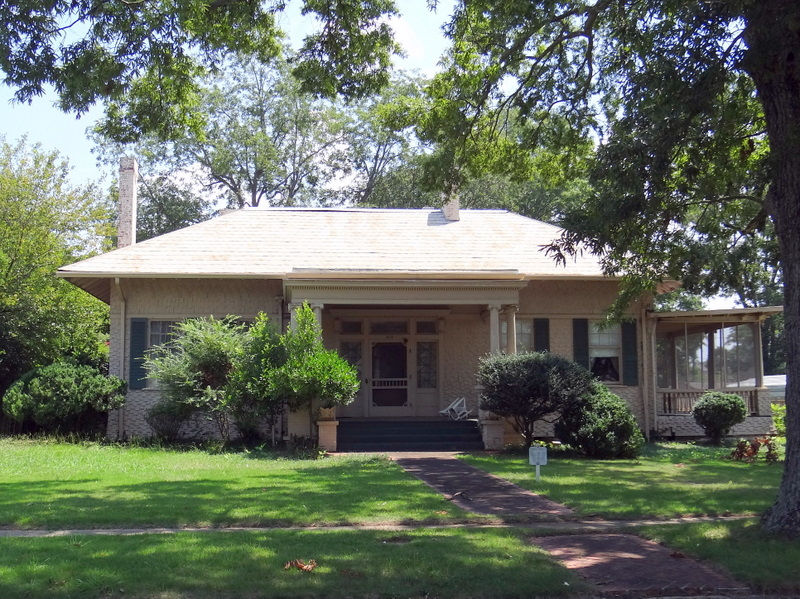
The Silk Stocking District is a historic district in the city of Talladega, Alabama, USA. It was listed on the National Register of Historic Places on December 13, 1979. Architectural styles include Queen Anne, Classical Revival, Colonial Revival, American Craftsman, and other late Victorian types. The district covers 113 acres (46 ha) and contained 120 contributing properties when first listed. They are worthy of preservation for the significance in American history, architecture, archaeology, engineering, and culture.

Map.jpg

HISTORIC PROPERTIES IN
THE SILK STOCKING DISTRICT

McEderry-Malone House

1905

303 South St E

Built by prominent local banker H.L. McElderry, this lovely Victorian two-story frame house has a shingled front gable and central square tower. Mr. and Mrs. W.C. Malone, Jr. purchased the houes in 1949.

On map, see #

73

Jemison-Purefoy House

c. 1890

301 South St E

Flanked by servant houses and out buildings, this magnificent Chateauesque motif home was designed and built by architect Stanford White for Mrs. Lou McElderry Jemison. The house was later purchased by Mrs. Eva B. Purefoy, owner and operator of the famous Purefoy Hotel. The house was purchased by the Alabama Institute for the Deaf and Blind in 1984 and restored for use in their transitional living program for hard-of-hearing / deaf young women.

On map, see #

74

Johnson Hall

1911

205 South St E

On map, see #

75

Manning Hall

1850

205 South St E

Originally used as a Masonic Girl's School, the building was deeded to the State of Alabama in 1858 to house the Alabama School for the Deaf. Noted for its fine proportions and Ionic portico, the building is one of Alabama's finest Greek Revivial structures and is listed in the Historic American Buildings Survey.

On map, see #

76

Wilson Shops

1898

205 South St E

On map, see #

77

Old Gym / Vocational Building

1885

205 South St E

On map, see #

78

Rogers-Dodge House Apts.

c. 1880

Oak Street

Built by industrialist E. Morgan Rogers, a prominent feature of this Victorian House is the round aureole at the corner of the upper story with circular receding petticoats beneath.

On map, see #

79

Link-Dodge House

c. 1890

412 Cherry St

Designed by architect W. D. Link in the Queen Anne motif, noteworthy features are the spire's bronze ornament and curved windows and ornamentation on every side of the house.

On map, see #

80

Johnson-Weaver House

c. 1907

414 Cherry St

Built by dr. Hal Johnson, this home features American Vignoli columns capped with Scamozzi Ionic capitals and leaded crystal panes bordering the front door.

On map, see #

81

Monroe-Rutledge House

c. 1915

416 Cherry St

Mrs. Seaborn Johnson built this house after being widowed in 1911. Extended eaves and partially exposed rafters are interesting features.

On map, see #

82

Bellingrath-Owen House

c. 1908

205 Margaret St

This elegant frame house with irregular massing and classical detailing was the home of George Bellingrath, founder of Bellingrath Gardens in Mobile.

On map, see #

83

Stringer-Waller House

c. 1905

203 Margaret St

This two-story Neo-Classical Greek Revival house was designed by Frank Lockwood for the Roland Lee Stringer family who owned it until 1986. The porch features Scamozzi Ionic capped American Vignoli columns.

On map, see #

84

bottom of page